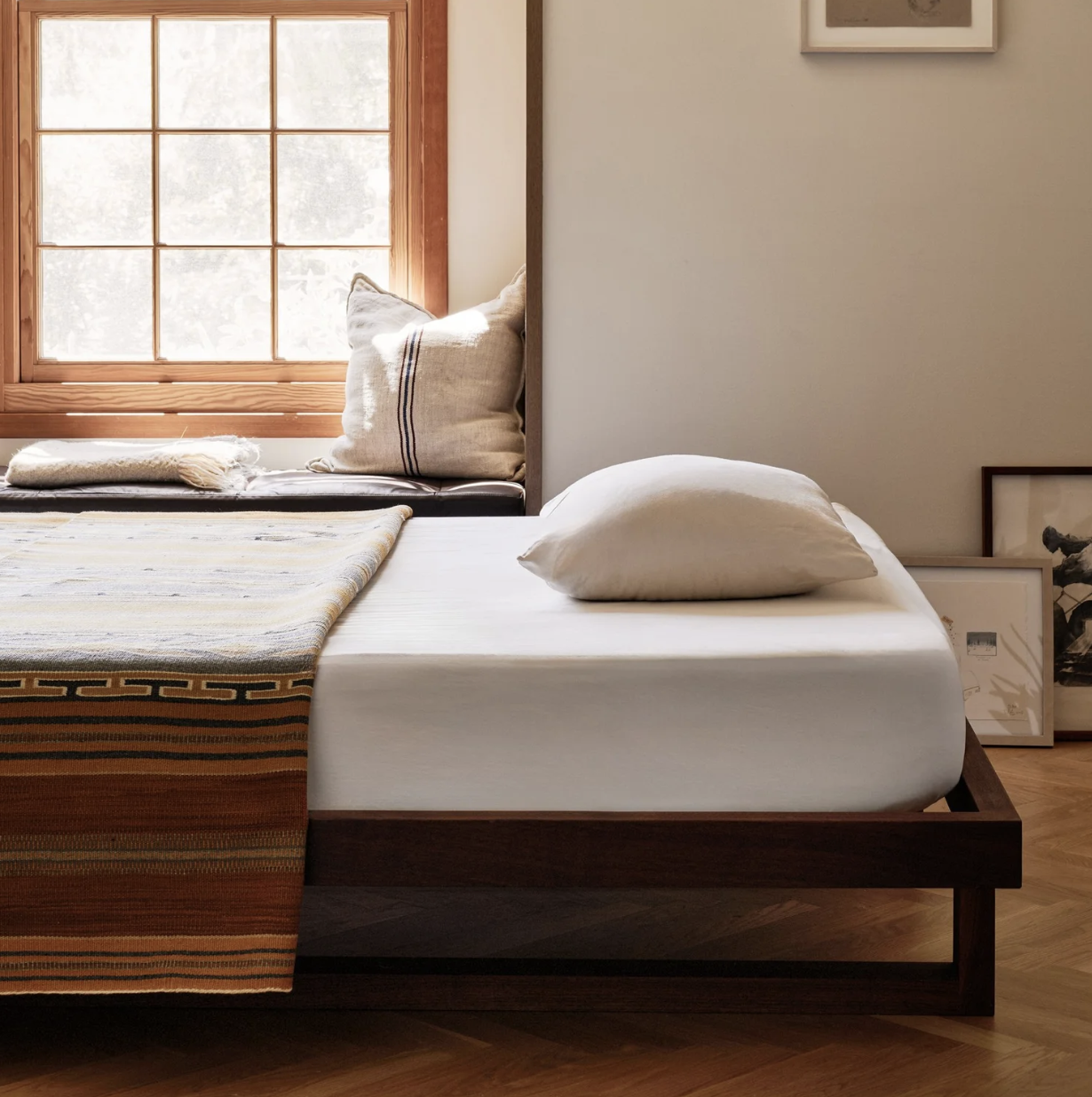
Boyd & Allister “Cholla Bed” - Santa Fe, New Mexico
Most people spend a third of their lives in bed. You'd think that fact would make choosing a bed frame a serious, considered decision. The kind where you ask hard questions about what something is actually made of, how it was built, and whether it will still be standing in thirty years. Instead, most people click "add to cart" on something that was factory made to ship in a flat box, relays on screws and cheap hardware, and starts showing its age and wobbling shortly after assembly.
At Boyd & Allister, we build custom bed frames the way furniture was built before mass production redefined what "good enough" means. Every piece that leaves our Santa Fe studio is hand-built from American hardwoods using joinery methods that have been proven over centuries. It's the kind of work that takes longer, costs more, and lasts for generations.
If you're in the market for a solid wood bed frame - whether you're here in Santa Fe, New Mexico or anywhere in the United States - here's what you should actually be looking for.
1. Hand-Cut Joinery.
This is the single biggest tell that a furniture maker knows what they're doing.
When you are buying a bed look to see how the legs meet the rails. Almost every bed frame has to break down and that is going to be the place that it fails. If you see metal brackets mounted with screws holding a bed together it will not last. Mortise and tenon joinery that transfers the weight of the rail directly into the leg has been how beds have been built for centuries.
Here's why it matters in practice: Metal hardware - that is screws, and corner brackets - work initially, but loosen and fail over time. Wood moves - seasonally, expanding and contracting with humidity. Beyond the movement of the wood itself a bed frame can see a lot of movement. Metal doesn't move and that mismatch is exactly what causes the creaking, squeaking, and wobbling that eventually makes a cheap bed frame feel like it's falling apart.
Hand-cut joinery also makes a bed frame genuinely portable. Traditional joints can be assembled and disassembled cleanly, without damaging the wood, which matters when you move. A well-built handcrafted hardwood furniture piece should be something you take with you for the rest of your life - not something you leave at the curb.
If you see metal hardware on a frame being sold as "artisan" or "hand-built," look closer. True hand-cut joinery doesn't need it.
2. Solid Wood. American Hardwood, specifically.
The furniture industry uses the word "wood" loosely. When a large retailer says a bed frame is made of wood, they may mean particleboard, MDF, or engineered composites with a veneer on top. These products look like wood in a photograph, but they don't behave like wood, and they don't last like wood.
Solid wood is a living material. It can be sanded and refinished when it shows wear. It can be repaired when it's damaged. Unlike engineered substitutes, it only gets more beautiful with age - the grain deepens, the surface color develops, and the piece begins to look like what it is: something that has been around for a while.
But not all solid wood is the same, and this is where sourcing matters.
Much of the solid wood furniture sold by larger retailers is made from tropical species like acacia or mango wood - fast-growing trees cultivated in Southeast Asia, often harvested as agricultural byproducts and shipped across the Pacific. These woods are not inherently bad for certain applications, but when you ship them across the world they twist and turn and dont stay stable.
American hardwoods are a different story. Species like walnut, white oak, ash, cherry, and maple are grown and milled in climates that more closely resemble where they'll ultimately live. They're denser, more stable, and more forgiving of climate fluctuations. We source our lumber from small domestic mills - not massive suppliers - which means the same care and attention we put into making the furniture was also put into cutting selecting and drying the lumber. The difference in working with family run small mill vs giant corporations is hard to quantify. Some of these folks have been cutting lumber from the same land for generations and that says more about sustainability than any certification can.
3. The Slats.
This is something most people never think to ask about, and it's one of the features that most directly determines how well you actually sleep.
The slat system is the structural foundation that supports your mattress. Most mass-produced bed frames treat slats as an afterthought - thin strips of softwood or composite material spaced too far apart, designed to hold a mattress well enough to pass a quality inspection on a factory floor. In real-world use over time, they bow, flex, crack, and fail.
We engineered our slats to support weight and not flex. Any board you lay across a 60” span is going to flex. Some beds put in a center support, they never stay in place and I personally dont like them. We designed a solid hardwood slat like an I beam with a rib set into the underside of the slat to keep it flat and solid, again using furniture building techniques to construct something you wont see or think about but is so essential to a bed frame
And since you made it here, a bonus thing to keep in mind:
4. Weight, Feel, and Finish.
These are harder to quantify, but they’re the most immediate way to assess quality when you're standing in front of a piece. Here’s our advice:
Pick it up. A well-built hardwood bed frame should be heavy and substantial. Density is a proxy for quality with solid wood. If a frame feels light, it's likely thin stock, engineered composites, or a hollow construction.
Run your hand across the surface. A properly hand-finished piece should feel smooth and consistent. No raised grain, no grit, no brush marks. The finish should feel like part of the wood, not a coating sitting on top of it. This kind of surface preparation takes time and multiple stages of hand-sanding that automated production lines simply don't allow for.
Sit on it. Move around on it. Listen. A quality handmade bed frame should be completely silent. No creaking, no popping, no settling. Any sound is a structural signal - either the joinery isn't tight, the wood isn't dry, or the hardware is already starting to loosen. A frame that's quiet on day one and quiet on year twenty is built right.
And finally: no wobble. Apply lateral pressure to a corner post. The frame should not flex, shift, or rack. Structural rigidity is the product of joinery quality, wood selection, and dimensional accuracy in the build. A wobbly frame isn't a frame that needs to be "broken in" - it's a frame with a problem.
Why Any of This Matters
The handmade versus mass-produced furniture question ultimately comes down to what you're buying. A mass-market bed frame is a depreciating product - something that works adequately for a while and then gets replaced. A well-built, custom bed frame is a long-term investment in the quality of your daily life. It's also, frankly, more honest about what furniture is supposed to be.
Whether it's a custom modern bed frame with clean, minimalist lines or something more traditional with sculpted posts and visible joinery, the standards don't change. The joinery is hand-cut. The wood is American hardwood. The slats are built to support. The finish is done by hand.
We work with clients across the United States - from Santa Fe to San Francisco to Dallas to New York City. If you've read this far, you probably already understand the difference between a piece of furniture and a piece of heirloom furniture. The next step is figuring out what yours could look and feel like.
Browse our bed frames or reach out directly. We love to talk.